Showing posts with label importance of PTFE tubes. Show all posts

Different Types of PTFE Tubes and Its Uses

There has been a gradual growth of Polytetrafluoroethylene (PTFE) or Teflon® from a product used only in high-value applications to a mainstream commercial requirement. However, today, ptfe tubes has become commercially viable in over 200 industrial, consumer and medical applications. Although sheets, rods, coatings and components corner the bulk of the market for PTFE products, PTFE tubing is now emerging as the key growth area and it is widely used across several industries. As a result of which the number of ptfe hose manufacturers are emerging. 

What is PTFE Tubing?

PTFE Tubing is defined as a semi-transparent, chemically inert, and non-toxic material that features temperature resistance and a surface that facilitates the flow of fluids. It can be used in service temperatures of up to 260°C. Thus, making it a material of choice in high temperature applications. It also has a breakdown voltage of up to 100Kv/mm which makes it excellent in electrical insulation.
These types of tubes are mostly used in applications requiring resistance to high temperatures, corrosive chemicals, and high voltages. Also, it can be used for other applications such as fluid transfer applications, cabling, and heat-exchanger systems. 

Reasons for the extensive use of PTFE Tubing:-
Highly resistant to heat - PTFE has high resistance which suggests that it has extremely high-melting temperatures. Therefore, it is suitable for use in industries where transportation of hot liquids is a daily requirement. 

Resistant to Corrosion: PTFE is also resistant to a wide variety of harsh chemicals and acids. Imperbeality is its another important feature, therefore water cannot make its way through.  Due to the property of imperbeality, PTFE tubing is the right option to transport chemicals.
Low coefficient of friction: PTFE tubing is absolutely perfect and widely used in catheters and snares due to the low coefficient of friction (0.1). 

Here mentioned are the different types and uses of PTFE Tubing:-
The PTFE tube manufacturers typically classify PTFE tubing in three different categories depending on the thickness of the wall and the diameter of tube, such as Pressure hose, Spaghetti tubing and Pipe liner. Within these categories, there is a further classification.

Let’s check out the various type of PTFE tubing:-
Split - In these PTFE tubes, there is a ridge that enables the tubing to be split longitudinally. It’s structure allows medical practitioners to extract PTFE introducers from patient’s bodies without having to dislocate the primary device.

Heat shrinkable - This type of tubing is made up of very thin material. Therefore, as it gets exposed to hot air, it begins to decrease and shrink. This is what makes the manufacturing of wires and glass tubes easier along with other insulation purposes.

Multi-lumen - This type of tubing contains a vast number of smaller tubes within an interior. Each and every layer comprises of a different type of fluid or wire. These types of tubes are used across a number of applications in the medical industry. 

PTFE tubing is also used in oil and petrol, for example, to seal and lubricate joints around fuel lines in automotive applications, to its notable chemical inertness. Thus, it helps prevent methanol or gasoline vapors (and odors) from seeping out. 

Some common uses of PTFE Tubing:-
In chemical areas, PTFE tubing can be used in pharmaceutical manufacturing plants. For example, corrosion resistant hose are used in corrosives transfer application. However, cosmetic hose is used in cosmetic manufacturing plant, and sanitary and aseptic hose can be utilized for high purity fluid transfer. And, heated hose is used to transfer hot fluids at a maintained temperature.

For automotive and railways, PTFE hose manufacturer supplies different kinds of products such as fuel hose, turbocharger hose, coolant hose, auto-brake hose, motor bike brakes hose, diesel Engine hose, motorsports hose and power steering hose.

There are several other general applications of PTFE Hoses such as charging hose for carton filling machines, high pressure gas hose for gas bottle filling, bottle filling hose for bottle filling machines. And, foodstuffs hose, hose for processing plants and dispensing.

PTFE tubing is used for a variety of industrial applications and since the last few years, it has been increasingly used in medical devices. It has an extremely smooth surface due to very low coefficient of friction.

While purchasing PTFE, it is important to select tubing of the correct material which can perform under the desired conditions, and is commercially viable and available.

Numerous Applications Of PTFE Hose


Polytetrafluoroethylene (PTFE) is a designed fluoropolymer. It offers protection from synthetic compounds is one of its essential characteristics. A wide temperature scope of - 100°F to 500°F (- 73°C to 260°C) make this hose material reasonable for most of liquid and surrounding temperature conditions found in industry. An incredibly low coefficient of erosion, (0.05 to 0.20), gives a non-stick surface. Water assimilation of PTFE is insignificant, under 0.01% by ASTM test, and it is FDA-endorsed for food and pharmaceutical use. Furthermore PTFE will withstand flexing and vibration without disappointment from flex weakness. PTFE is artificially dormant, it won't separate or break down in administration and it has a boundless time span of usability since properties don't change with age or introduction to climate. 


For more than 60 years now, Polytetrafluoroethylene, or PTFE as it is better referred to, has been perceived as a one of a kind material with numerous uncommon characteristics bringing out its utilization in truly every part of industry in current occasions. PTFE is every now and again used to cover non-stick container and cookware. It is generally utilized as unite material in medical procedures, and as a grease in enormous scope hardware.

Another of the numerous employments of PTFE is to make hoses. The characteristics of PTFE 
 making it perfect for hoses everything being equal, sizes and intentions are its opposition and self-cleaning qualities. PTFE hoses brag an unmatched compound obstruction, as there are not many substances on the planet that can infiltrate or even influence the quality of PTFE. Furthermore, PTFE hoses keep up a solid protection from temperature, climate and maturing, totally hampering any debasement in temperatures from - 94°F up to 500° F (progressively outrageous temps with extra sleeves for high warmth and cryogenic exchange) Foreign substances don't connect or adhere to the covering dividers of PTFE hoses either, making PTFE hoses for all intents and purposes self-cleaning. Since PTFE hoses keep up such a high clean standard they are regularly utilized in the assembling of pharmaceuticals, cosmetics and food and drink. PTFE hoses are likewise broadly utilized for hot oil, synthetic substances, acids, cements, paints, steams, solvents, and more in light of the fact that PTFE hoses are the most flexible, clean, and sturdy kind of hoses accessible.

There are several assortments of PTFE hoses, utilized for a scope of purposes. PTFE hoses without interlaces are intended for low-pressure use or unpressurized employments. They are accessible in two variants: crease or smooth bore. Non-plaited PTFE hoses are utilized all the more every now and again in mechanical applications encompassing food, research center and pharmaceutical applications. Both the smooth bore PTFE hoses and the tangled PTFE hoses with treated steel support are utilized generally in all ventures. However, the highest caliber PTFE hoses by PTFE hose manufacturers are intended for reloading of forceful synthetics, pharmaceutical and food items and speak to the most requesting applications.

For more data about PTFE hoses, 

1.  PTFE Hoses in Chemical industries,

l  Utilized in pharmaceutical assembling plants.
l  Synthetic and corrosive hose are utilized in compound assembling plant.
l  Consumption safe hose are utilized in corrosives move application.
l  Restorative hose in corrective assembling plant.
l  Clean and Aseptic hose  for high virtue liquid exchange. 


2. Warmed hose (Electrical or Steam Heated) to move hot liquids at looked after temperature.

B) PTFE Hoses Automotive and Railways:

l  Fuel hose
l  Turbocharger hose
l  Coolant hose
l  Auto-Brake hose
l  Engine bicycle Brakes hose
l  Diesel Engine hose
l  Motorsports hose
l  Force Steering hose
l  Transmission Oil hose

C) PTFE Hoses in General applications:

l  Charging hose for Carton filling machines.
l   High weight gas hose for Gas bottle filling.
l  Container filling hose for bottle filling machines
l  Staples hose, Beverage and beverages
l  Hose for handling plants and Dispensing
l  Gear for food and drinking

PTFE Antistatic Tube Uses in Various Industries

Polytetrafluoroethylene additionally is known as PTFE is a dark white fluoropolymer that can be artificially made and the procedure is known as free extreme polymerization or utilizing the procedure of different tetrafluoroethene atoms. PTFE is utilized in a wide number of uses and enterprises, for example, car, aviation likewise telecom.


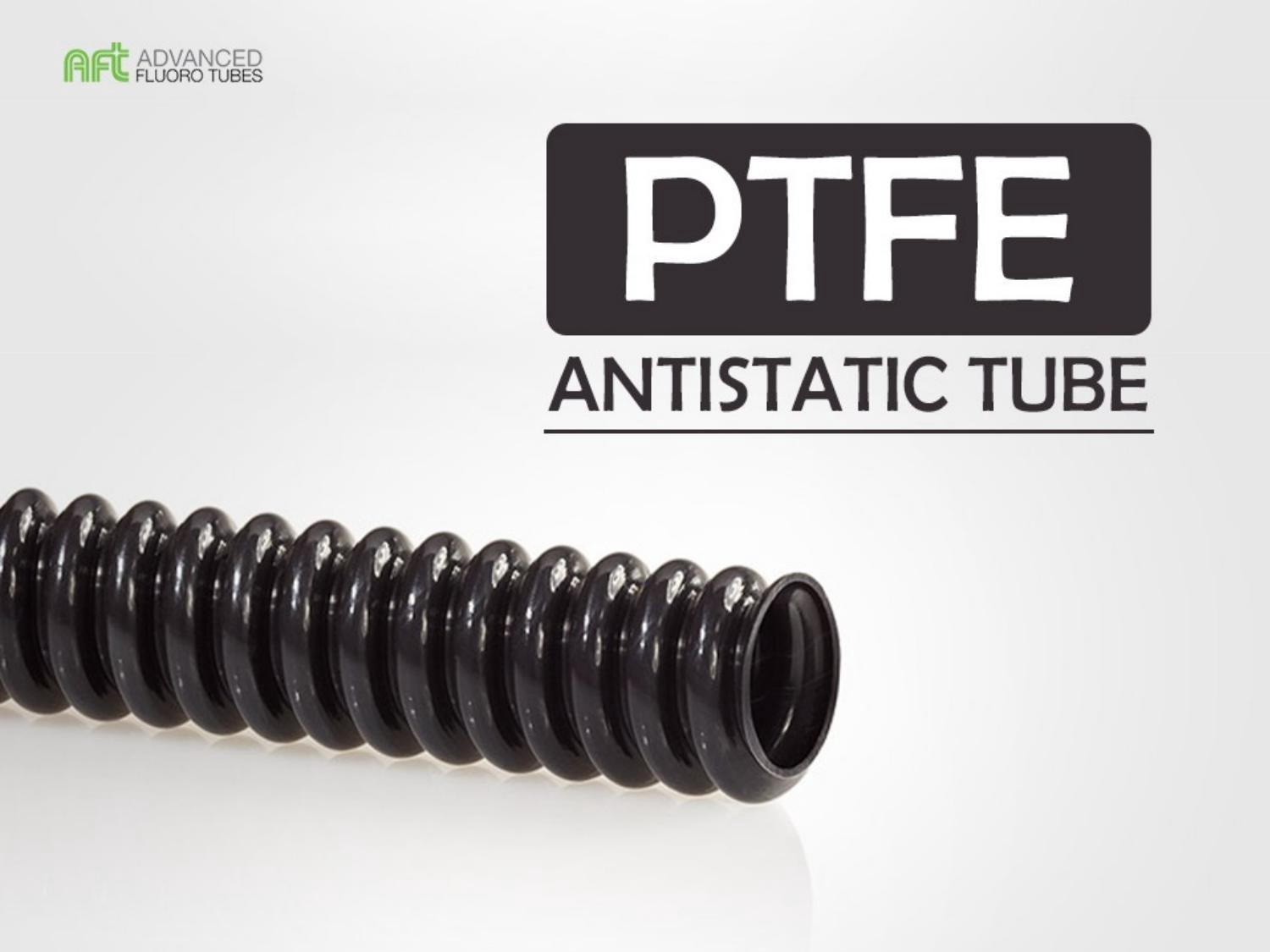
PTFE Antistatic Tube

In applications where static charge is made (I: e utilizing a medium complete with a high stream rate), it is prudent to utilize conductive (antistatic) PTFE tubing. At the point when one uses a static charge it can touch off the medium (as a result of electric starts) or can cause gaps in the divider tubings. The filler in the tubing doesn't forestall static charge and empowers great and safe direction.

Conductive (antistatic) PTFE tubing is accessible from stock in smooth plan.

You'll find that PTFE tubes or poles are joined with metals, for example, tempered steel or carbon that expands the quality of and wear opposition.

PTFE Properties

PTFE has a couple of particular properties and that is the reason it is favored by most businesses. It is impervious to synthetic substances, warmth, power, and it is profoundly adaptable too.

PTFE has a dissolving purpose of 327 degrees Celsius and it is synthetically latent. In any event, when it is gotten through extraordinary temperatures, for example, high temperatures (260-degree Celsius) and low temperatures (- 200 degrees Celsius) it doesn't change or gives any indications of debasement. I

· It has immaculate flexural quality that too in incredibly low temperatures.

· It has breathtaking electrical quality

· It is a strong power for its dielectric quality

· Its water opposition power is really high too

· It has a low coefficient of erosion

· It has an exceptionally high-thickness level (2200kg/m3)

The way that PTFE is synthetically latent that it just responds to just a couple of synthetics, so the best way to cause any effect on it is through vitality radiation.

What are the Properties of Filled PTFE

Unadulterated PTFE is dependent upon misshapening under tension, there are a couple of added substances that can act the hero. In any case, a wide range of filled PTFE (altered) can't be utilized in nourishment and drink applications.

Albeit some PTFE tube makers do add filler to unadulterated PTFE for its inalienable focal points, they being its quality can be expanded, the electrical conductivity can increment and its rough obstruction additionally builds complex. Be that as it may, fillers can influence PTFE on some different levels, for example, concoction obstruction. On the off chance that you are a PTFE hose producer and need to add fillers you have to concentrate on the sort of properties you need to improve.

Advantages of PTFE

We definitely know PTFE has a wide scope of utilizations. So it tends to be utilized in both the designing and assembling fields, PTFE coatings are utilized to make various types of parts, for example, screws and course that are impervious to consumption.

PTFE coatings can get rid of concerns in regards to the mileage of screws and course in the event that they are covered with PTFE. It makes segments heat-safe as well. PTFE tubings can be utilized in nourishment enterprises as it is non-harmful since it is FDA-endorsed it is protected to utilize.

What are Styles of PTFE available in a Mechanical Industry Company?

A majority of industries including the steel Industry and chemical processing industry use consistently utilizing pipes composed of fluoropolymers and mainly PTFE hoses are utilized to make these pipes. This kind of pipes is largely used to carry chemicals which are highly reactive or corrosive. The popularity of these pipes is such that gradually carbon- made pipes and another kind of pipes are slowly being replaced with PTFE tubing.


The Properties of PTFE Tubes 

The PTFE tube properties are drastically different from other pipes and the popularity of the pipes is huge because of its unique properties. The important PTFE tube properties are as follows. The unique properties fulfill the needs of the different industries right from mechanical industries company to chemical industries. 

·         Thermal properties- PTFE tubing can withstand very high temperatures, in fact it can withstand temperatures as high as 680 °F for a stipulated period under cryogenic conditions; Here the pronounced properties of PTFE tubes do not waver even when it is brought under high temperatures such as 500 degrees Fahrenheit and that’s not all it can withstand extremely cold temperatures too even when it is down to -320 °F.

·         Electrical properties- PTFE tubing has impressive electrical properties as it is a great insulator and has competent insular properties.

·         UV resistance and wearability- PTFE tubing boasts of superb UV resistance and wearability.
·         Wear and Friction Qualities- The surface of PTFE tubing is relatively slippery and smooth and thus it boasts of great wear and frictional qualities.

Usage of PTFE Tubes

The success of PTFE tubing is largely dependant on the unique properties and that is why it is used in a large number of industries. The PTFE uses and Properties are as follows:

In automotive applications, the property of PTFE has the property of withstanding high temperatures that are more than 250 degrees C and hence is perfect for highly corrosive fluid transfers and hence PTFE tube suppliers consider it an integral part of their industries.

The medical industry cannot do without PTFE tubes either because of its lubricity and chemical inertness. One such example is that of catheters which are deemed safe to insert in human bodies too. That speaks a lot of the dependency of the medical industry on PTFE tubes.

PTFE tubes are a must-have in laboratories and have the power and the potentiality of replacing the use of glass tubes. The qualities which make PTFE tubes indispensable is its inert properties and also the fact that it is very durable.

In electrical applications, the PTFE tubing is set apart because of its dielectric properties that make it particularly suitable for the process of insulation of high voltage cables.

The PTFE properties are also used in mechanical industries which makes bearing pads, under extreme conditions such as high pressure-low velocity load conditions. Some examples to note here are pipe support pads, bridge bearing pads, and mounting pads for some heavy duty manufacturing.
Check out some of the short list applications:

·         Heat exchangers
·         Coatings
·         Non-Shrink & Heat Shrink Tubing
·         Carburetor Shafts
·         Mold release
·         Medical Catheter Guide Wires
·         Automotive brake parts
·         Jet fuel filters
·         Cryogenic Applications
·         Bearing Pads
No wonder the uses and importance of PTFE tubes are hitting the roof thanks largely because of its unique properties.