Numerous Applications Of PTFE Hose


The advancement of Polytetrafluoroethylene (PTFE) hose – all the more generally known as Teflon® – from a specialty item utilized uniquely is used in several applications to a standard necessity has been extremely progressive.

Be that as it may, in recent decades, PTFE use appears to have crossed a minimum amount, permitting it to turn out to be economically suitable in more than 200 applications. And keep in mind that sheets, bars, coatings, and parts corner the greater part of the market for PTFE items, PTFE tubing is presently developing as the key development region.

PTFE tubing applications

The utilization of PTFE tube has spread across different applications including car, compound, electrical, and clinical. 
In-car applications, the capacity of PTFE to withstand temperatures over 250oC makes it a perfect contender for high-temperature liquid exchange.
In clinical applications, PTFE tubing is in colossal interest because of its lubricity and concoction inactivity. Catheters utilizing PTFE tubing can be embedded into the human body unafraid of response or scraped spot with anyone parts.
In concoction applications – including research facilities – PTFE hose is a perfect trade for glass because of its latency and toughness.

In electrical applications, the astounding dielectric properties of virgin PTFE make it appropriate for protecting high voltage links.

Kinds of PTFE tubing

Contingent upon the application, PTFE tubing is divided into three general classes – each characterized by the cylinder's distance across and the divider thickness.

PTFE tubing in the clinical gadget showcase

When all is said in done, little measurement spaghetti tubing is utilized in clinical applications. The utilization of PTFE around there fixates on two key properties: lubricity and biocompatibility. Fluoropolymers display generally excellent lubricity contrasted and different plastics. PTFE is the most lubricious polymer accessible, with a coefficient of the grating of 0.1, trailed by fluorinated ethylene propylene (FEP), with 0.2. These two polymers speak to most by far of all fluoropolymer tubing utilized in clinical gadgets.

The biocompatibility of any polymer utilized in a clinical gadget is an undeniable concern. PTFE exceeds expectations around there and has a long history of in vivo use. Clinical evaluation fluoropolymers should meet USP Class VI and ISO 10993 testing prerequisites. Preparing neatness is additionally a significant factor. 


PTFE tubing – handling methods

The uniqueness of PTFE tubing rests in the unpredictability of PTFE as a polymer. While most polymers loan themselves effectively to infusion forming – permitting them to be made into complex shapes, PTFE because of its high softening point and liquefy thickness must be pressure shaped. The high liquefying purpose of PTFE additionally implies that expulsion – as ordinarily rehearsed – can't be applied to it. PTFE glue expulsion has, along these lines, become a procedure that is progressively looked for after – given the developing interest for PTFE tubing.

Expelled evaluations of PTFE were first utilized in the wire and link industry during the 1950s, where the great dielectric properties of the material demonstrated basic to the creating gadgets advertise. The principal tubing was made by expelling PTFE over a wire and afterward evacuating it-an a work concentrated procedure. During the 1960s, an innovation developed that could play out the expulsion of PTFE without a wire center. This procedure empowers PTFE tubing to be financially created in long constant lengths by PTFE hose manufacturers.

Different Variations of PTFE Tubes – Available in Various Grades and Sizes

Polytetrafluoroethylene or PTFE is an especially adaptable ivory-white and misty plastic fluoropolymer; it is made by the free-radical polymerization of numerous tetrafluoroethene particles and is appropriate for a wide scope of uses in ventures as different as aviation, the food industry, pharmaceuticals and telecoms and so on.
PTFE is ordinarily known as Teflon™ (possessed by Chemours) and offers striking nonstick properties in cookware applications, for example, kitchen container and heating plate.
PTFE is created in bars or containers of any size or loaded up with glass, carbon, tempered steel or some other materials to expand wear opposition and quality, whatever your undertaking or fabricate, we make certain to have a material that will work for you. 
PTFE Types – Determination of Different Grades and Sizes
PTFE tubing sizes are meant as IDxOD.
·         Some standard measurement sizes of PTFE tubes are 2×4, 4×6, 6×8 and 8×10 while some standard measurement sizes are 1/16×1/8, 1/8×3/16, 3/16×1/4, 1/4×5/16, 3/8×1/2″. 
·         Little sizes of PTFE tubing are utilized in lab instruments like Chromatography, spectrometer, and Titrators while larges sizes are utilized in examining lines, pneumatic stock and as electrical, warmth or concoction protection. The weight rating of PTFE tubing is subject to the IDxOD of the tubing.
·         PTFE tubing is fitted to hardware and machines utilizing pressure fittings, for example, connectors and connectors. Significantly, the measurement resilience of ID and OD of the PTFE tubing be tight so that there is no spillage toward the end fitting. The fittings are fabricated in different materials like tempered steel grades SS304 or SS316 and utilizing PTFE material. PTFE fitting is utilized with PTFE tubing in applications where metal fittings are not allowable. 
·         PTFE tubing is produced in long persistent lengths running from 25-250 meters or all the more relying upon the IDxOD of the PTFE tubing. PTFE tubing can be provided in loops or twisted on plastic or wooden spools. 
·         PTFE tubing has a smooth hazy or smooth translucent appearance and this appearance relies upon the kind of PTFE crude material used to make it. PTFE tubing can likewise be made in numerous colors like red, dark, blue, green, yellow. Moreover, PTFE tubing with shading stripe for its distinguishable feature can be made.
There are auxiliary tasks that can be performed on PTFE tubing like, flaring, flanging, meshing or slice to length.
Choosing the right PTFE grade and brand for an application is significant as each PTFE tar maker structures PTFE grades in light of explicit applications. An Electrical application, for instance, will request that the estimations of the electrical properties showed by the PTFE tubing are on the higher side of the range. PTFE tubing fabricated with measurements as indicated by American Wire Gauge (AWG) principles is extremely well known in electrical applications in ventures like aviation and vehicle.
PTFE tubing is adaptable and can without much of a stretch be bent easily. Care ought to be taken anyway to guarantee the curve sweep can't then twist range indicated for the IDxOD of the PTFE tubing.

What are the contrasts among Teflon and PTFE?

While picking a polymer for their things, clients normally have requests concerning PTFE hose versus Teflon: what is the qualification between the two? The primary differentiation lies in the name. PTFE is the shortened name of the substance polytetrafluoroethylene, and Teflon is the trade name of a comparative polymer. In the event that you are scanning for an astoundingly versatile, non-stick material that is compound, electrical and warm sheltered, look no more distant than PTFE.

The History of Teflon

In 1938, a DuPont logical master named Roy J. Plunkett adventitiously discovered Teflon while attempting to make another chlorofluorocarbon refrigerant. DuPont authorized the new fluorinated plastic and selected the Teflon trademark in 1945. It was first familiar with individuals when all is said in done in 1960 as Teflon-secured (non-stick) searing skillet and cookware.

What are the Properties of PTFE?

PTFE has maybe minimal coefficient of pounding against any solid known to man

It is hydrophobic, which implies neither water nor water-containing substances wet PTFE

Unadulterated PTFE is artificially latent and significantly insoluble in numerous solvents or synthetics

It has a colossal working temperature go, showing thermally stable enough to be used between — 328ºF and +500ºF without undermining

PTFE has a high flexural quality, even at low temperatures

It has high electrical resistance and dielectric quality, especially at high radio frequencies

What are the Applications for PTFE?

About portion of all PTFE made is used for wiring in flying and PC applications (associate wires, coaxial connections, etc.) considering its amazing dielectric properties. Joined with its high dissolving temperature, PTFE is the perfect predominant substitute for the more delicate and lower-melting point polyethylene regularly used in ease electrical applications.

For mechanical use, PTFE's low crushing fits plain bearing, gears, slide plates, and various applications with the sliding movement of parts, outmaneuvering both acetal and nylon in these limits. PTFE makes longer-suffering, better parts that reduce granulating, wear, and imperativeness use of equipment, lower bolster costs, and augmentation the lifetime of the two segments and device.

Due to its high-temperature rating and remarkable non-reactivity, PTFE tubes are normally used as holders, advancement joints, liners in hose get-togethers, present day pipelines, and various applications including dangerous and responsive manufactured substances.

PTFE versus Teflon: What's in a Name?

Whether or not you call it PTFE or Teflon, this current material's astonishing adaptability grants it to be used in a staggering combination of things and applications in about every industry. The masters at Reading Plastic can machine and production any PTFE part you need with exactness and enormity.

PTFE Antistatic Tube Uses in Various Industries

Polytetrafluoroethylene additionally is known as PTFE is a dark white fluoropolymer that can be artificially made and the procedure is known as free extreme polymerization or utilizing the procedure of different tetrafluoroethene atoms. PTFE is utilized in a wide number of uses and enterprises, for example, car, aviation likewise telecom.


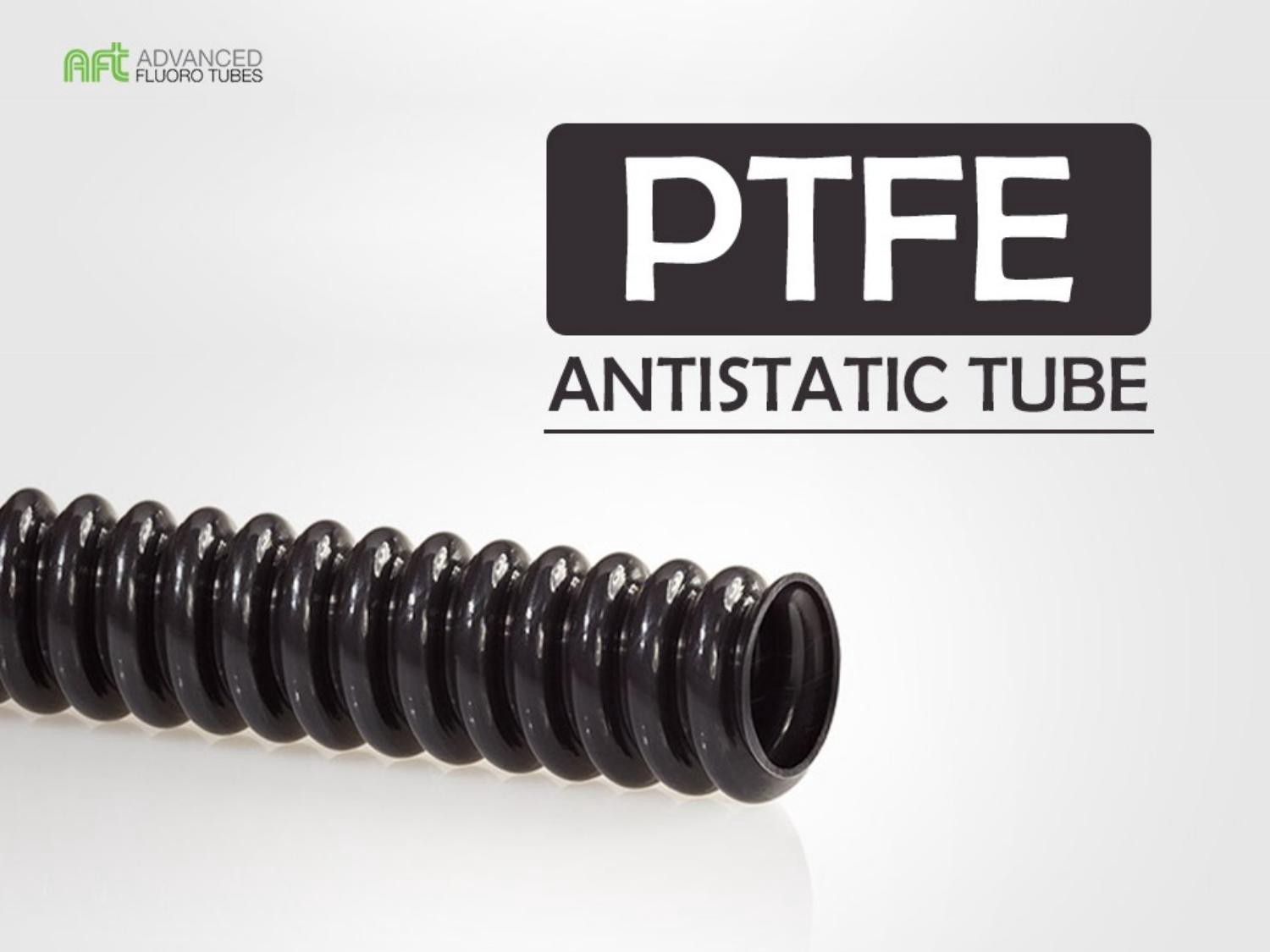
PTFE Antistatic Tube

In applications where static charge is made (I: e utilizing a medium complete with a high stream rate), it is prudent to utilize conductive (antistatic) PTFE tubing. At the point when one uses a static charge it can touch off the medium (as a result of electric starts) or can cause gaps in the divider tubings. The filler in the tubing doesn't forestall static charge and empowers great and safe direction.

Conductive (antistatic) PTFE tubing is accessible from stock in smooth plan.

You'll find that PTFE tubes or poles are joined with metals, for example, tempered steel or carbon that expands the quality of and wear opposition.

PTFE Properties

PTFE has a couple of particular properties and that is the reason it is favored by most businesses. It is impervious to synthetic substances, warmth, power, and it is profoundly adaptable too.

PTFE has a dissolving purpose of 327 degrees Celsius and it is synthetically latent. In any event, when it is gotten through extraordinary temperatures, for example, high temperatures (260-degree Celsius) and low temperatures (- 200 degrees Celsius) it doesn't change or gives any indications of debasement. I

· It has immaculate flexural quality that too in incredibly low temperatures.

· It has breathtaking electrical quality

· It is a strong power for its dielectric quality

· Its water opposition power is really high too

· It has a low coefficient of erosion

· It has an exceptionally high-thickness level (2200kg/m3)

The way that PTFE is synthetically latent that it just responds to just a couple of synthetics, so the best way to cause any effect on it is through vitality radiation.

What are the Properties of Filled PTFE

Unadulterated PTFE is dependent upon misshapening under tension, there are a couple of added substances that can act the hero. In any case, a wide range of filled PTFE (altered) can't be utilized in nourishment and drink applications.

Albeit some PTFE tube makers do add filler to unadulterated PTFE for its inalienable focal points, they being its quality can be expanded, the electrical conductivity can increment and its rough obstruction additionally builds complex. Be that as it may, fillers can influence PTFE on some different levels, for example, concoction obstruction. On the off chance that you are a PTFE hose producer and need to add fillers you have to concentrate on the sort of properties you need to improve.

Advantages of PTFE

We definitely know PTFE has a wide scope of utilizations. So it tends to be utilized in both the designing and assembling fields, PTFE coatings are utilized to make various types of parts, for example, screws and course that are impervious to consumption.

PTFE coatings can get rid of concerns in regards to the mileage of screws and course in the event that they are covered with PTFE. It makes segments heat-safe as well. PTFE tubings can be utilized in nourishment enterprises as it is non-harmful since it is FDA-endorsed it is protected to utilize.

PTFE/Teflon Tube Manufacturer in Mumbai, India


PTFE tubes or Teflon Tubes are extensively used with virtually all industrial solvents, chemicals, and corrosive materials, and can be used in varied processes at high temperatures. It is steam sterilized without impacting its physical properties, such as surface hardness, elongation, flex life or deformation under load. PTFE Tubes are translucent white in color, however, the whiteness degree varies in the ones which have dimensional wall thickness. Colored Teflon tubes are also available and generally used for simplification for tube routing during system installations. 


Polytetrafluoroethylene (PTFE) is a high molecular polymer and is a big part of the cable and tubing industry because it has some unique properties starting right from electrical properties to chemical inertness also high-temperature resistance. This material is much in demand as far as manufacturing and industrial sectors are concerned because it has specific properties.
The Properties of PTFE Tubes
The properties of PTFE tubings are pretty unlike other metal pipes or carbon pipes.
Thermal properties- PTFE has heat-resistant properties and this enables this kind of pipes to withstand high temperatures of 680 °F for a certain period of time under cryogenic conditions; PTFE tubes do not change their properties even when they undergo extreme high temperatures such as 500 degrees Fahrenheit and it is  cold temperatures almost down to -320 °F.
UV resistance and wearability- PTFE tubes have other qualities such as UV resistance and wearability quality.
Wear and Friction – PTFE has its smooth surface and it has excellent wear and frictional qualities.
Electrical properties- PTFE tubing also has insulation properties, in other words, it is a great insulator and it’s and surface resistivity is pretty great.
 Advanced Fluro Tubes is a much-recognized PTFE Tube manufacturer and supplier. They manufacture reliable and quality PTFE tubes that start from 0.8mm to 28 mm ID and 0.25mm to 3.5 mm wall thickness.

PTFE tubes are considered flexible tubes and they are manufactured in several continuous lengths ranging from 300-20 meters. When it comes to continuous lengths we emphasize two things the OD & ID of the PTFE tube. Advanced Fluro tubes have other products such as long length PTFE rods or ropes that have a diameter from2mm-8mm. These PTFE ropes help in the sealing of applications.

As PTFE tube manufacturers of pretty sound repute, they ensure that they carry out proper quality checks and ensure that they carry out extremely tight tolerances which besides preventing leakage also reduce scrap.

As a leading PTFE tube manufacturer and supplier, the manufacturers ensure that they deliver pipes and tubes right on schedule making their customers satisfied and happy.
Some application properties increase the abrasion resistance of self-lubricating PTFE tubes. Here engineers emphasize the application and serve customized solutions the application requirements.

For example, there are numerous applications that require PTFE tubes with antistatic properties. 

Besides, virgin PTFE tubes advanced fluoro tubes also manufacture numerous services for example such as end flaring, sleeving, and specific cut lengths and so on.

Different Forms of PTFE Tubings Catering to Aerospace and Aviation Industries


PTFE tubing (polytetrafluoroethylene), is one of the fluoroplastics and is used in a number of industries. It is used in many critical and demanding applications. This especially holds true for an aviation and aerospace industry.
PTFE tubes is an indispensable product used in aircraft because of its typical properties. These unique properties include the low coefficient of friction, high-temperature resistance, low dielectric constant and inflammability.
PTFE colored tubes.jpg

Best Applications in Aviation Industry

PTFE is extremely important for the aviation industry as it has unique properties such as a low coefficient of friction, low dielectric constant, and inflammability.
Another key feature of PTFE is that the PTFE coating is very important for the aviation industry because of its temperature resistance. It helps in retaining physical properties ranging from temperatures such as -195 degrees Celsius to +260 degrees Celsius. Check out a few of the examples that use PTFE coating at work in the aerospace industry.
Aircraft Wings
PTFE is an essential material that is mostly used in the airplane’s components. For example, it is largely used in the production of leading edges of the wings of an airplane, these are the flaps that help in slowing it down during landing.
The low coefficient of friction of the material makes this possible. It is also used in PTFE coating and helps in the shielding in the aluminum rods. This helps minimize the increased vibration that it otherwise could have caused.
Electrical Connectors
Because of the importance of plug and play in the air, electrical connectors are the need of the hour now. The electrical connectors require low abrasion resistance values, easily provided by the PTFE coating.  
Fuel Systems
The features (PTFE coating) make it an integral part of the fuel systems. It is used widely in both inline and refueling parts to ensure that it remains safe and sound especially when the plane is in the air.
Some of the other applications of PTFE coating in aircraft are as follows,
  • Control surfaces
  • Electric harness parts
  • Air bearings
  • Electric harness parts
  • Tank fuel seals
  • Electronic device trays
  • Throttle box seals
  • Arming components

PTFE Tubing: Process Parameters And Their Impact


PTFE Tubing extrusion is among the most difficult processes within the purview of the polymer space. All polymers have their set of peculiarities and these play a part in things like processing and machining. But PTFE tube comes with different process parameters, and finding the right combination that works consistently is something that not every tube manufacturer will know. Let’s find out some of the parameters here followed by PTFE hose manufacturers.


Handling: Handling resin is among the most important but easily overlooked part of PTFE processing. While many resin manufacturers give out layout guidelines for providing the shear on the resin before the processing starts these are more important for the tubing. 

Blending: The parameters about blending include the type of extrusion aid used. The blending needs to be done in the correct manner, the final extrude will either too soft or too dry. Furthermore,  the blend has to be uniform, the preform billet will have uneven densities, causing issues during the extrusion.

Preforming:  Preforming is done to create a shape that can fit into an extruder. 


  • Preforming has two functions: first, it provides a solid shape and second, it also removes any air pockets form within the material. The process needs to be done in a way to keep too little pressure and not go for enough venting of the air inside the material. 


Extrusion: While extrusion is understandably the most important step, by the time the preform billet is loaded into the extruder, the preceding processes have already defined a lot of the tube’s final characteristics. Extrusion gives it the final shape and this process helps maintain both adequate pressures on the billet while maintaining the concentricity of the final tube. 

Sintering: Heat the tube in a way that the temperature needs to account for both a drying section and the sintering section. The drying section should be warm enough to evaporate all the traces of vapor from the tube. At the same time, if it is too warm, the vapors may start getting ignited. If the tube gets heated too quickly, there is a chance of over-sintering. Too much heat can cause dimensional deviations. In PTFE. Therefore the temperature must turn out the PTFE in a ‘gel state’ just before it leaves the sintering chamber and then cool down at room temperature.

The PTFE tube also undergoes a process called pigmentation, the addition of anti-static fillers also extrusion of specific profiles. All the above processes need to be modified to allow a proper end-result.