Showing posts with label PTFE Properties. Show all posts

Why is PTFE Tube Regarded as a Versatile Pipe? Chief PTFE Properties


Polytetrafluoroethylene or more commonly known as PTFE is a synthetic fluoropolymer made up of of tetrafluoroethylene.  

It is hydrophobic, high density, non-wetting, and is of high temperatures, PTFE tube is what you can call a versatile material as it is used for a number of applications, though it is more popular for its non-stick properties.
 
 The Chief Properties of PTFE

The teflon hose is a flexible, thermal resistant, chemical resistant, non-stick and also electrically resistant material with its melting point being around 327°C, and pure PTFE has high flexural strength, even in very low temperatures, high dielectric strength, and electrical strength. Potentially high resistance to water and fairly low coefficient of friction. PTFE’s density ranges from the 2200 kg/m3 mark.

The only con is that it may have a reaction to chemical agents and solvents such as chlorine trifluoride, xenon difluoride, cobalt (III) fluoride, or elementary fluorine if put through under high pressure and temperature conditions. PTFE also does not have a good resistance to high energy radiation, which forces the breakdown of PTFE molecules.


A Few Modified Features of PTFE

Apart from PTFE there are other two copolymers which has different properties.

PFA or Perfluoroalkoxy is similar to PTFE because of its properties as it is flexible, very chemically resistant also thermally stable and can be used up to 260 degrees C even if PTFE has the properties of being able to creep, PFA is creep resistant and is used for a number of properties such as extrusion, melt-processing, injection moulding, transfer moulding, compression moulding and blow moulding.

TFM, better known as PTFE-TFM, is polytetrafluoroethylene with perfluoropropylvinylether taken as an additional modifier, boasting of a material which is stiff being creep-resistant like PFA, and weldable.

Advantages of PTFE

There is no doubt about the fact that PTFE is indeed very versatile and has a huge number of applications to speak of. 

It is an integral part of manufacturing and engineering industries, it is not limited to using in tubes or liners or for handling or storing corrosive chemicals, but it is also used in parts such as bearings or screws to increase the lifespan of the parts and also the machinery it is part of.


The longer lasting, higher-performance parts ensure that it enhances the efficiency of any machine it is part of, thus reducing the requirement of constantly replacing parts, which leads to saving money and reducing waste. Hence it will cut down on constant maintenance issues with the equipment which will lead to the reduction of any expensive manufacturing downtime due to the repairs and faults.

PTFE coat is a type of material that is non-wetting, and enables self-cleaning which helps reduce the cost of frequent cleaning.

 Teflon textile finishes are environment-friendly because the finish repels water and oil stains, and reduce the requirement of dry-cleaning and fabrics will also tend to dry up quickly, using far less energy with methods as tumble drying, and with the reduction of wear, it also tends to last longer.

Get High- Quality PTFE Tubes for Various Manufacturing Purposes

Polytetrafluoroethylene or PTFE tube (it also goes by the name of Teflon) is a versatile kind of material. It is ivory-white and is made up of opaque plastic fluoropolymer; it is composed by the technique of free-radical polymerization of a number of tetrafluoroethene molecules and is used for a huge range of applications in industries which ranges from telecoms, pharmaceuticals to aerospace and the food and drink industry.

The chief characteristic of PTFE tube is that it offers a low friction coefficient that enables higher flows and easy wash down. This process can get rid of the process-contaminating residue. Since PTFE’s permeability is low it can enable the use of severe chemical and specialty gas service. It also features a high dielectric strength which is inert to most chemicals and solvents. It is this characteristic of the chemical-resistant tubing that enables it to be used in a number of industries such as chemical processing, industrial, general laboratory, insulation automotive, aerospace, insulation, and food service applications.

 
The Chief Properties of PTFE

PTFE is one of the few inventions which boasts of properties such as high flexibility, chemical resistance, thermal resistance, non-stick property besides being an electrically resistant material. There are very few inventions which come even close to the properties of PTFE.

PTFE’s melting point veers around 327°C, and pure PTFE can be called completely chemically inert, highly insoluble in most chemicals or solvents and thermally it is stable enough to be used between the temperatures ranging from 200 degrees C and +260 degrees C without any signs of degradation.

That’s not all there are some other PTFE properties too which is its high flexural strength, even in supremely low temperatures, dielectric strength and high electrical resistance, resistance to water ( thanks to the fluorine’s high electronegativity), and also the low coefficient of friction. PTFE’s density is actually pretty high almost as high as 2200 kg/m3.

Barring its reaction to a few chemical agents and solvents (such as xenon difluoride, chlorine trifluoride, cobalt (III) fluoride, or elementary fluorine, only when is put under the condition of high pressure and temperature), the only factor that can be taken into consideration when using PTFE is that it’s resistance power to high energy radiation isn’t too high which causes the breakdown of the PTFE molecule.

Teflon tube also has a wide number of applications in many industries. It is the unique properties of PTFE which allows the tubing to solve problems and that too in a jiffy. When compared with other polymers it also has the best price/performance ratio.

However, PTFE tube fittings can be hard to bond, but what works in its favor is that it is non-melting and is also self-extinguishing. PTFE tube suppliers make tubes which are oversized in either diameter and/or thickness. This helps customers to produce perfect items within the required size and reduces signs of any minor surface imperfection.

It is true that PTFE was discovered by happy accident in 1938 and now, we simply cannot imagine a world without it!

PTFE Properties - PTFE Tube

Image result for ptfe tube


PTFE or Polytetrafluoroethylene is a versatile plastic material, ivory-white and opaque fluoropolymer; it is composed of free-radical polymerization of a host of tetrafluoroethenemolecules and can be used for a huge number of applications in varied industries such as the food and drink industry, the telecom industry and the pharmaceuticals.

The Chief Properties of PTFE

PTFE is a flexible, thermal resistant, chemical resistant, non-stick and also electrically resistant material with its melting point being around 327°C, and pure PTFE has high flexural strength, even in very low temperatures, high dielectric strength and electrical strength. Potentially high resistance to water and fairly low coefficient of friction. PTFE’s density ranges from the 2200 kg/m3 mark.

The only con is that it may have a reaction to chemical agents and solvents such as chlorine trifluoride, xenon difluoride, cobalt (III) fluoride, or elementary fluorine if put through under high pressure and temperature conditions. PTFE also does not have a good resistance to high energy radiation, which forces the breakdown of PTFE molecules.

A Few Modified Features of PTFE

Besides PTFE, there are some of the two copolymers which are almost as useful as PTFE, but with some different properties.

PFA or Perfluoroalkoxy has almost similar properties of PTFE as it is flexible, very chemically resistant and thermally stable and can be used up to 260 degrees C even if PTFE has the properties of being able to creep, PFA is creep resistant and is used for a number of properties such as extrusion, melt-processing, injection moulding, transfer moulding, compression moulding and blow moulding.

TFM, better known as PTFE-TFM, is polytetrafluoroethylene with perfluoropropylvinylether taken as an additional modifier, boasting of a material which is stiff being creep-resistant like PFA, and weldable.

Advantages of PTFE

Advantagesof PTFE ,There is no doubt about the fact that PTFE is indeed very versatile and has a huge number of applications to speak of. 

It is especially used in manufacturing and engineering, it is not limited to using in tubes or liners or for handling or storing corrosive chemicals, but it is also used in parts such as bearings or screws to increase the lifespan of the parts and also the machinery it is part of.

The longer lasting, higher-performance parts ensure that it enhances the efficiency of any machine it is part of, thus reducing the requirement of constantly replacing parts, which leads to saving money and reducing waste. Hence it will cut down on constant maintenance issues with the equipment which will lead to the reduction of any expensive manufacturing downtime due to the repairs and faults.

PTFE coat is non-wetting, thus felicitating self-cleaning which again reduces the cost of frequent cleaning.

 Teflon textile finishes are environment-friendly because the finish repels water and oil stains, and reduce the requirement of dry-cleaning and fabrics will also tend to dry up quickly, using far less energy with methods as tumble drying, and with the reduction of wear, it also tends to last longer.
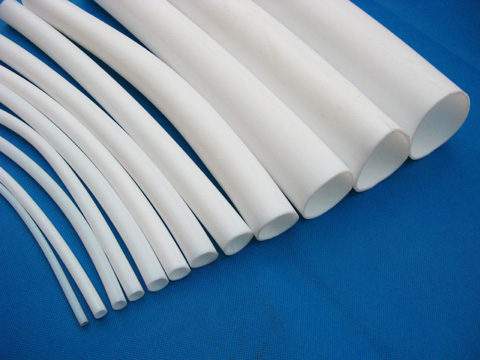
The above-listed properties of PTFE quite explain why it is one of the most sought-after pipes and tubes catering to the needs of most of the industries.

more details about : https://www.aftubes.com/