Showing posts with label PTFE tube fittings. Show all posts

PTFE Tubing Benefits & Applications


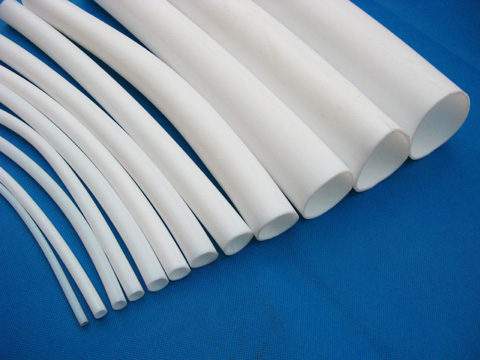
The polytetrafluoroethylene has some unique features and has made it a must-add material for a large number of industries and applications. The unique features of PTFE tubing are a very wide service temperature range, extreme chemical resistance, non-stick properties, a low coefficient of friction, and it also boasts of an extended service life.


8 Effective Applications of PTFE Tubing

1.     There is a high demand for PTFE tubings in aircraft industries. The non-flammable fluoropolymers are what makes them indispensable along with a lower friction coefficient that makes them work under extreme temperatures and pressure too. This is the reason they are used in this industry to wrap up the wiring and cables.

2.    PTFE is highly useful in Automotive Industries. It is used in the automobile engine, specifically for fuel evaporation and fuel rails, a high-quality tubing as it has low gas permeability.

3.     PTFE tubes are indispensable for Electrical Industries.  In electrical industries, PTFE tubing is used to cover the electric wires and cables with the help of a high-quality Teflon PTFE tubing as it can endure the high temperature and can be used as a protective barrier to the wires. These tubings come in a wide variety of colors that helps in the identification of the wires when they are connected to homes or offices.

4.     PTFE is also used in the making of medical apparatus and devices fluoropolymers and they are used in a large number of medical industries to manufacture a number of instruments and devices such as ventilators, drainage tubings, gloves earpieces, aprons and other artificial tissues. Doctors also use some functional devices that enable biochemical analysis of human body and needless to say they are also made of Teflon

5.   PTFE tubings are an integral part of Food Industries as they are used for food processing in which special rollers are used. The lifeline of these rollers can be extended by wrapping them with Teflon FEP roll covers. They are non-sticky in nature and helps preserve the quality of the product.

6.   PTFE is a part and parcel of textile industries. Chemical transferring in pipes lead to corrosion of pipes. Teflon PTFE tubings are used to avoid the problem and the textile rollers are coated with PTFE

7.    PTFE tubing is very necessary for 3D Printing and thus used effectively in printing Industries. In 3D printing, the filament is transferred inside the printing nozzle, which performs under high-temperature range. PTFE tubing has unique features such as high-temperature coefficient and it is also non-sticky in nature which enables the slipping of the material from the nozzle, thus it is regarded as the preferable polymer especially used in 3D printing industries.

8.   The importance of PTFE tubing cannot be undermined in Chemical Industries. What makes PTFE tubing work in chemical industries? Well, it is mainly used for the Non-alkali nature of the Teflon PTFE that makes it work, as highly sensitive liquids are transferred in these tubings.

What is PTFE Tubing (PolyTetraFluoroEthylene)? PTFE Tubing Manufacturers in India

Most of the industries such as the steel Industry and chemical processing consistently use fluoropolymer pipes that are made of materials like PTFE and hoses to carry corrosive chemicals or highly reactive chemicals. PTFE pipes are indeed replacing and pipes made of carbon and other metals.
Polytetrafluoroethylene (PTFE) is a high molecular polymer that is an integral part of cable and tubing industry because of its unique properties ranging from electrical properties to chemical inertness along with high-temperature resistance. This material is heavily used in the manufacturing and industrial sectors because of its specific properties. 

 The Properties of PTFE Tubes
The properties of PTFE are unique and sets it apart from metal pipes carbon pipes.
Thermal properties- PTFE’s heat-resistant properties enable the tube to withstand temperatures of  680 °F for a stipulated time period under cryogenic conditions; PTFE tubes remain unchanged even at super high temperatures such as 500 degrees Fahrenheit and it is as much resistant to cold temperatures almost down to -320 °F.
UV resistance and wearability- PTFE tubing has fairly impressive UV resistance and wearability quality.
Wear and Friction – PTFE with its smooth surface shows exemplary wear and frictional qualities.
Electrical properties- PTFE tubing with its insulation properties has great electrical properties as it is a great insulator and has great surface resistivity.
 Advanced Fluro Tubes is a renowned PTFE Tube manufacturer and supplier. They manufacture world-class PTFE tubes that range from 0.8mm to 28 mm ID and 0.25mm to 3.5 mm wall thickness.
PTFE tubes are flexible tubes and they are manufactured in various continuous lengths from 300-20 meters. Continuous lengths depend on two things the OD & ID of the PTFE tube. Advanced Fluro tubes also manufacture long length PTFE rods or ropes that have a diameter ranging from 2mm-8mm. These PTFE ropes enable the sealing of applications.

As PTFE tube manufacturer of repute, they are stringent about their quality checks and ensure extremely tight tolerances which prevent leakage eliminates or reduces scrap.

As a leading PTFE tube supplier, the tubes are manufactured and delivered right on schedule ensuring the customers are happy. 

Some applications need properties that have increased abrasion resistance and/or self-lubricating PTFE tubes. Here engineers focus on the application and come up with customized solutions that meet up with application requirements.

For example, there are numerous applications that need PTFE tubes with antistatic properties. Advanced Fluro Tubes strive hard to cater to the rising demand for manufactured PTFE tube

That’s not all Advanced fluoro tubes also manufacture virgin PTFE tubes, and they offer numerous services such as sleeving, end flaring, specific cut lengths and so on. In specific applications, there is a requirement of one end of the PTFE tube/sleeve that needs to be sealed, and the seals need to undergo a quality test so that they are leak proof / watertight at 15 kg/cm2 pressure at the time of a specific test known as hydro testing. The resulting quality of the seal is a result of an in-house developed technology.

Get High- Quality PTFE Tubes for Various Manufacturing Purposes

Polytetrafluoroethylene or PTFE tube (it also goes by the name of Teflon) is a versatile kind of material. It is ivory-white and is made up of opaque plastic fluoropolymer; it is composed by the technique of free-radical polymerization of a number of tetrafluoroethene molecules and is used for a huge range of applications in industries which ranges from telecoms, pharmaceuticals to aerospace and the food and drink industry.

The chief characteristic of PTFE tube is that it offers a low friction coefficient that enables higher flows and easy wash down. This process can get rid of the process-contaminating residue. Since PTFE’s permeability is low it can enable the use of severe chemical and specialty gas service. It also features a high dielectric strength which is inert to most chemicals and solvents. It is this characteristic of the chemical-resistant tubing that enables it to be used in a number of industries such as chemical processing, industrial, general laboratory, insulation automotive, aerospace, insulation, and food service applications.

 
The Chief Properties of PTFE

PTFE is one of the few inventions which boasts of properties such as high flexibility, chemical resistance, thermal resistance, non-stick property besides being an electrically resistant material. There are very few inventions which come even close to the properties of PTFE.

PTFE’s melting point veers around 327°C, and pure PTFE can be called completely chemically inert, highly insoluble in most chemicals or solvents and thermally it is stable enough to be used between the temperatures ranging from 200 degrees C and +260 degrees C without any signs of degradation.

That’s not all there are some other PTFE properties too which is its high flexural strength, even in supremely low temperatures, dielectric strength and high electrical resistance, resistance to water ( thanks to the fluorine’s high electronegativity), and also the low coefficient of friction. PTFE’s density is actually pretty high almost as high as 2200 kg/m3.

Barring its reaction to a few chemical agents and solvents (such as xenon difluoride, chlorine trifluoride, cobalt (III) fluoride, or elementary fluorine, only when is put under the condition of high pressure and temperature), the only factor that can be taken into consideration when using PTFE is that it’s resistance power to high energy radiation isn’t too high which causes the breakdown of the PTFE molecule.

Teflon tube also has a wide number of applications in many industries. It is the unique properties of PTFE which allows the tubing to solve problems and that too in a jiffy. When compared with other polymers it also has the best price/performance ratio.

However, PTFE tube fittings can be hard to bond, but what works in its favor is that it is non-melting and is also self-extinguishing. PTFE tube suppliers make tubes which are oversized in either diameter and/or thickness. This helps customers to produce perfect items within the required size and reduces signs of any minor surface imperfection.

It is true that PTFE was discovered by happy accident in 1938 and now, we simply cannot imagine a world without it!

PTFE Properties - PTFE Tube

Image result for ptfe tube


PTFE or Polytetrafluoroethylene is a versatile plastic material, ivory-white and opaque fluoropolymer; it is composed of free-radical polymerization of a host of tetrafluoroethenemolecules and can be used for a huge number of applications in varied industries such as the food and drink industry, the telecom industry and the pharmaceuticals.

The Chief Properties of PTFE

PTFE is a flexible, thermal resistant, chemical resistant, non-stick and also electrically resistant material with its melting point being around 327°C, and pure PTFE has high flexural strength, even in very low temperatures, high dielectric strength and electrical strength. Potentially high resistance to water and fairly low coefficient of friction. PTFE’s density ranges from the 2200 kg/m3 mark.

The only con is that it may have a reaction to chemical agents and solvents such as chlorine trifluoride, xenon difluoride, cobalt (III) fluoride, or elementary fluorine if put through under high pressure and temperature conditions. PTFE also does not have a good resistance to high energy radiation, which forces the breakdown of PTFE molecules.

A Few Modified Features of PTFE

Besides PTFE, there are some of the two copolymers which are almost as useful as PTFE, but with some different properties.

PFA or Perfluoroalkoxy has almost similar properties of PTFE as it is flexible, very chemically resistant and thermally stable and can be used up to 260 degrees C even if PTFE has the properties of being able to creep, PFA is creep resistant and is used for a number of properties such as extrusion, melt-processing, injection moulding, transfer moulding, compression moulding and blow moulding.

TFM, better known as PTFE-TFM, is polytetrafluoroethylene with perfluoropropylvinylether taken as an additional modifier, boasting of a material which is stiff being creep-resistant like PFA, and weldable.

Advantages of PTFE

Advantagesof PTFE ,There is no doubt about the fact that PTFE is indeed very versatile and has a huge number of applications to speak of. 

It is especially used in manufacturing and engineering, it is not limited to using in tubes or liners or for handling or storing corrosive chemicals, but it is also used in parts such as bearings or screws to increase the lifespan of the parts and also the machinery it is part of.

The longer lasting, higher-performance parts ensure that it enhances the efficiency of any machine it is part of, thus reducing the requirement of constantly replacing parts, which leads to saving money and reducing waste. Hence it will cut down on constant maintenance issues with the equipment which will lead to the reduction of any expensive manufacturing downtime due to the repairs and faults.

PTFE coat is non-wetting, thus felicitating self-cleaning which again reduces the cost of frequent cleaning.

 Teflon textile finishes are environment-friendly because the finish repels water and oil stains, and reduce the requirement of dry-cleaning and fabrics will also tend to dry up quickly, using far less energy with methods as tumble drying, and with the reduction of wear, it also tends to last longer.

The above-listed properties of PTFE quite explain why it is one of the most sought-after pipes and tubes catering to the needs of most of the industries.

more details about : https://www.aftubes.com/

What is Teflon? Teflon Tube Properties - Teflon Tube Suppliers in Mumbai?

Polytetrafluoroethylene or PTFE is widely known as Teflon. It is a versatile ivory-white and opaque plastic fluoropolymer. Where is it used? It can be used for a number of applications in industries such as aerospace, the food and drink industry, also pharmaceuticals and telecoms.

Image result for ptfe hoses


Properties of PTFE or Teflon

PTFE has some unique properties which separate it from other pipes and tubes, it’s melting point is around 327°C, and the pure PTFE is also totally chemically inert, besides that it is also insoluble in most chemicals and solvents and is thermally stable and can be used without degrading between -200 degrees C and +260 degrees C.

Besides the above-mentioned properties, teflon also shows flexural strength, even at pretty low temperatures, it also shows high electrical resistance and dielectric strength, resistance to water and it has a low coefficient of friction. Add to that, PTFE’s density which is as high as 2200 kg/m3.

In fact, barring some reaction chemical agents and solvents such as chlorine trifluoride, cobalt (III), xenon difluoride, fluoride, xenon difluoride or elementary fluorine, if it goes through high pressure and temperature, the other factor to keep in mind is that PTFE is that it does not have a very good resistance to high energy radiation, which causes the breakdown of the PTFE molecule.

 Advantages and Benefits of Teflon

The biggest advantage of PTFE is that it is really versatile and has a number of applications in different industries, especially in manufacturing and engineering. So Teflon is used not just to make tubes or liners to store corrosive chemicals, but also by coating parts such as bearings or screws which increases the lifetime of the parts and the machinery they are part of.

It holds true that when the machinery lasts longer and produce high-performance parts they improve the efficiency of any machinery and do not need constant replacement of parts thus saving both money and time. So there is no requirement of fitting the replacements every now and then and also helps in the reduction of waste. This reduces the requirement of maintenance needs as there are fewer chances of the equipment breaking down. It can also eliminate expensive manufacturing downtime because of faults and repairs.

 PTFE is also non-toxic and the minor problem to be concerned about is the polymer fume fever, otherwise, it is FDA approved and food-safe, so this material is invaluable to most industries.

 Teflon Tube Suppliers in Mumbai

Advanced Fluro Tubes manufacturers manufacture world class PTFE tubes and PTFE hoses in India. They are an ISO 9001:2015 certified company and their plants are located on the outskirts of Mumbai, India.

They have an experienced management and can focus on a great many things such as consistent quality, customer experience and continual product improvement. Advanced Fluro Tubes is growing by leaps and bounds and catering to varied industry sectors such as Instrumentation, Oil & Gas, Chemical Process Industry, Electrical, Power, Steel, Automobile, Pharmaceutical, etc.
Every year they are adding brand new products and expanding their capacities & capabilities. They are emerging as an organization for customers and veer towards innovative solutions.


PTFE Tubing: Process Parameters and Their Impact

Related image


PTFE Tube extrusion is considered to be one of the most difficult processes within the polymer space. All polymers have their typical properties and these properties impact both their processing and machining. PTFE tube comes with such varied process parameters, that every tube manufacturer will find it difficult to find a combination that works consistently.


 Parameters and their effect on the End-product

Whenever you think of PTFE processing one of the first things that are overlooked but needs our attention, is handling resin. Due to the structure of PTFE tubing, the fibrils that form extrusion depend on the strength of the final tubing. One of the reasons for the poor formation of fibrils is excessive shearing of the resin, before extrusion. This then, causes a dent in the achievement of good final properties.

·         Blending- Blending is one of the parameters which impact the final product and this can only be fixed with extensive trial and error. Unless the blending is done in the correct manner, the final extrudate will either be too soft or too dry. Also, if the blend is not uniform, the preform billet will have uneven densities, and the extrusion will then have quite a few issues.

·         Preforming-Preforming is mainly done to create a shape that can be fitted easily into the extruder. Preforming ideally has two functions: first, obviously, it gives shape and second, it also removes any air pockets from within the material. The process has to be done keeping in mind the one fact that too little pressure does not allow for an adequate venting of the air within the material. 

·         Extrusion-Extrusion is certainly one of the most important steps, as when the preform billet gets loaded into the extruder, then the preceding processes have already defined a lot of the tube’s most defining characteristics. However, it is also true that extrusion offers the tube its final shape and this process primarily helps maintain the adequate pressures on the billet at the same time ensuring the concentricity of the final tube. 

·         Sintering- When the tube is heated the temperature has to be heated for both a drying section along with a sintering section. The drying section needs have to be adequately warm to evaporate all traces of vapour from the tube. And, if it is too warm, the vapours may get ignited. Also, although PTFE does not melt, it may do so under its weight, it may even get elongated during sintering, causing changes in dimensional deviations. Therefore the temperature needs to be sent to make sure that the PTFE is able to reach the characteristic ‘gel state’ just before it goes out of the sintering chamber, so it can cool down when it reaches the room temperature. 

Apart from the above-mentioned parameters, PTFE tube also undergoes various other processes such as pigmentation, the addition of anti-static fillers and also the extrusion of specific profiles. Each of these requirements needs to undergo all of the above processes and understand how they need to be modified for a specific end-result.